
One is usually used as an adjective, equal to the number 1. That’s easy enough.
- One day next week you can come to my house.
- There’s one piece of cake left.
When used as a number, it’s a noun. That’s also easy.
- Four minus three equals one.
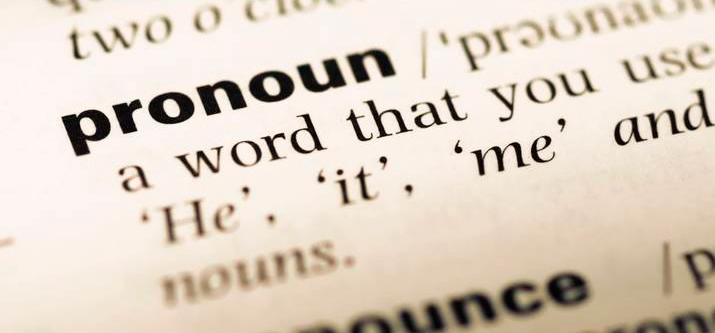
But one can also be used as a pronoun, and that’s where it can get complicated. As a pronoun, it replaces a noun so we don’t repeat the noun. We use ONE for singular nouns, and ONES for plurals.
- Those cookies look great! Can I try one?
- I’d love to have a dog. One with big brown eyes and a long tail.
- Look at those kids! The ones playing frisbee. They’re my nephews.
- Are you going to buy the red or the blue jacket? Actually, I’m getting the green one.
We don’t use ONE for uncountable nouns, we use SOME.
- If you need rice for the paella, I can give you some. (rice is uncountable)
We can use one when we are being impersonal and objective, not referring to anyone in particular, or talking about people in general. When we use it like this, one can include the speaker or writer:
- One can use the Internet without knowing how cookies work.
- If one fails, one must try harder the next time.
This use of the pronoun one is more common in British English; in the US, one is often replaced by you.
- British English: One would think that the President would step down after the scandal.
- US English: You’d think that the President would step down after the scandal.
Lastly, the expressions «one in + plural number» and «more than one» always take a singular verb.
- One in four dentists recommends this toothpaste.
- One out of every five teachers gets this question wrong.
- There is more than one reason for this.
- More than one person has missed the plane today due to bad traffic.
Comentarios recientes